Savory bread and egg bake with cheese is a simple oven dish made with bread, eggs, milk, seasoning, and grated cheese.
This dish is a warm, practical everyday bake that turns basic ingredients into a satisfying meal with very little effort.
It belongs to simple Austrian home cooking and is made with bread, eggs, milk, broth seasoning, nutmeg, and cheese.
The original typewritten recipe does not explain every small step in detail. It gives the basic idea, but not all the small details about soaking, texture, or baking.
In this version, the spirit of Helga’s original recipe is kept, while the method is explained in a way that makes the dish easier to prepare in a modern kitchen.
Ingredients
For 3 to 4 servings:
- Bread – about 200 to 250 g, cubed, preferably slightly stale
- Milk – 500 ml
- Eggs – 4
- Salt – to taste
- Herb salt – to taste
- Broth or stock powder – a little
- Nutmeg – to taste
- Grated cheese – as desired
- Butter or oil – for greasing the baking dish
If the original typewritten recipe did not include exact quantities for every small adjustment, the amounts here have been arranged as a practical guide for modern home cooking.
How to Make It
1. Prepare the baking dish
Lightly grease a medium baking dish with butter or oil.
This helps prevent the bread and egg mixture from sticking during baking.
2. Add the bread
Cut the bread into cubes and spread them evenly in the prepared baking dish.
Slightly stale bread works especially well because it absorbs the milk and egg mixture without becoming too mushy too quickly.
3. Make the egg mixture
In a bowl, whisk together the milk, eggs, salt, herb salt, a little broth or stock powder, and nutmeg.
The mixture should be smooth and evenly seasoned.
Use the broth seasoning carefully, especially if the cheese is already salty.
4. Soak the bread
Pour the egg mixture evenly over the bread cubes.
Press the bread down gently with a spoon so the cubes absorb the liquid.
Let it sit for a few minutes if the bread is very dry.
5. Add the cheese
Sprinkle grated cheese over the top.
Use enough to cover the surface lightly, but not so much that it becomes too heavy or oily.
6. Bake the dish
Bake in a preheated oven at about 190°C / 375°F for around 20 minutes.
The bake is ready when the surface is lightly golden and the egg mixture has set.
If the center still looks liquid, bake for a few more minutes.
7. Finish and serve
Let the bread and egg bake rest for a few minutes after removing it from the oven.
This makes it easier to cut and serve.
Serve warm, either as a simple main dish or as part of a light meal with salad or vegetables.
Tips for Best Results
- Slightly stale bread works better than very fresh bread because it absorbs the liquid more evenly.
- Do not rush the soaking step. A few minutes of resting helps the bread soften properly.
- Use broth seasoning carefully, especially if the cheese is salty.
- Add the cheese just before baking so the surface becomes lightly golden.
- For a softer texture, use a little more milk. For a firmer bake, use slightly less milk or a little more bread.
Old family recipes are often less exact than modern recipes. It helps to pay attention to the look, texture, and smell of the dish, not only the written timing.
Common Problems and How to Fix Them
The bake is too wet in the middle.
This usually means the egg mixture has not fully set yet, or the bread absorbed too much liquid. Bake it a little longer and check the center before serving.
The top browns too quickly.
If the cheese browns before the center is cooked, cover the dish loosely with foil and continue baking until the inside is set.
The flavor tastes too salty.
Broth seasoning, herb salt, and cheese can all add saltiness. Use them carefully and taste the mixture before baking if possible.
Ingredient Substitutions and Notes
This recipe does not use Topfen or Quark, so no dairy-cheese substitute is needed here.
Bread is the base of the dish. Slightly stale white bread, mixed bread, or simple rolls can be used. Very soft fresh bread may become mushy, so it is better to let it dry out a little first.
Milk gives the bake its soft texture. Whole milk makes the dish richer, while lower-fat milk makes it lighter.
Eggs help the mixture set in the oven. The bake should be soft, but not runny.
Broth or stock powder adds a savory note. Use only a small amount because it can make the dish too salty when combined with cheese.
Nutmeg gives the egg and milk mixture a warm, old-fashioned flavor. A small pinch is enough.
Grated cheese can be adjusted to taste. A mild melting cheese works well if you want a gentle flavor. A stronger cheese gives the bake more depth.
What Does It Taste Like?
This dish tastes mild, savory, soft, and comforting.
It is not a heavily seasoned modern dish. It is closer to simple Austrian home cooking, where the flavor comes from bread, eggs, milk, broth seasoning, nutmeg, and melted cheese.
The inside is soft and tender, while the top becomes lightly golden from the cheese. It is a humble dish, but it feels warm and filling.
Storage and Reheating
Leftovers can be stored in an airtight container in the refrigerator.
To reheat, use the oven or a microwave. The oven helps the top become firmer again, while the microwave makes the dish softer.
Recipes with dairy and eggs should not be left at room temperature for a long time.
This dish is best eaten warm, but leftovers can be served the next day if stored properly.
What to Serve With It
This recipe goes well with:
- A simple green salad
- Cucumber salad
- Tomato salad
- Steamed vegetables
- A light vegetable soup
- Pickles or a small sour side dish for contrast
For a simple everyday meal, serve the bread and egg bake with salad and a few fresh vegetables on the side.
This section can later be used for internal links to related recipes.
The Original Typewritten Recipe
This recipe is based on one of Helga’s typewritten recipes.
Unlike many of the handwritten recipes in the collection, this one was prepared with a typewriter. That gives it a slightly more structured feeling, almost like a practical household recipe meant to be used again.
Even so, old family recipes often include only the most important notes. Exact amounts, temperatures, or small steps were sometimes left out because the cook already knew them by heart.
For this article, the original recipe has been carefully adapted into a version that is easier to follow in a modern kitchen.
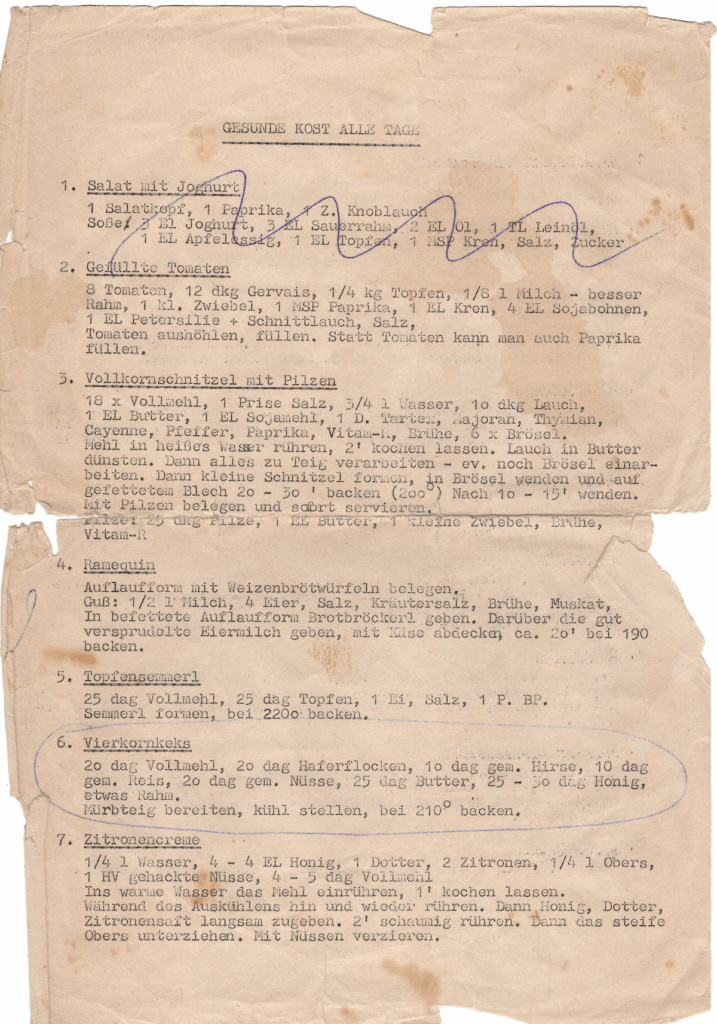
Helga’s original typewritten recipe. This version keeps the spirit of the original while making the steps easier to follow today. Photo by the author, 2026.
You can download the original image here.
Open the image and right-click to save it.
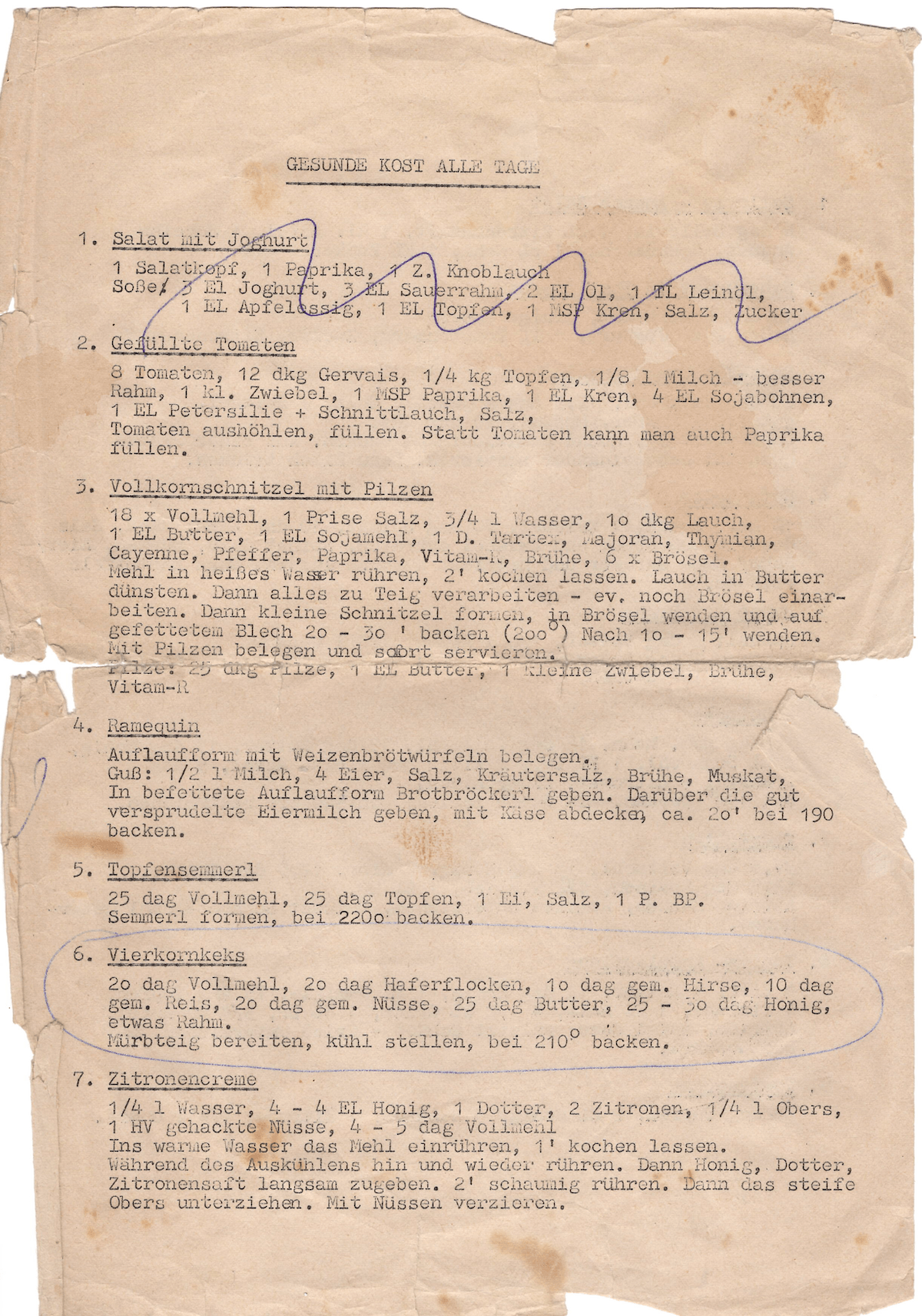
This recipe is No. 4 in the “Healthy Everyday Meals” series.
Memories Behind This Recipe
This recipe is No. 4 in Helga’s “Healthy Everyday Meals” series.
What stands out about this dish is how practical it feels. It takes bread, eggs, milk, and cheese, and turns them into something warm and satisfying without complicated preparation.
It also feels like the kind of recipe that would have been useful in a household where food was not wasted. Slightly stale bread does not need to be thrown away. With milk, eggs, and a little seasoning, it becomes the base of a comforting oven dish.
The original source calls this dish “Ramequin.” Today, that word is more commonly understood in English as a small baking dish, not as the name of this type of recipe. For modern readers, it is easier to understand this dish as a savory bread and egg bake.
This recipe has a quiet, everyday charm. It is not a special occasion dish, but it shows how simple ingredients can become a proper meal when handled with care.
It is also easy to adapt. A little onion, vegetables, or a different cheese can change the flavor, while the basic idea stays the same.
Frequently Asked Questions
Summary
Savory bread and egg bake with cheese is a simple, traditional-style recipe from Austrian home cooking.
It uses bread, eggs, milk, seasoning, and cheese to create a warm, filling oven dish that is especially useful for leftover or slightly stale bread.
The most important points are to let the bread absorb the egg mixture, season gently, and bake until the center is set and the top is lightly golden.
This version keeps the character of Helga’s original typewritten recipe while making it easier to prepare in a modern kitchen.
About Grandma Helga
Grandma Helga is a mother and grandmother who spent many years cooking for her family.
The recipes shared on this site are the ones she prepared in her everyday life.
They have been carefully preserved from her handwritten notes and passed down over time.
Today, her family organizes, translates, and shares them so they can continue to be enjoyed.
All recipes are simple, reliable, and made for real daily cooking.