This tea loaf is part of Helga’s first collection of simple home recipes. The handwritten note is very short, but it contains the heart of a modest homemade loaf: wholemeal flour, honey, eggs, butter, raisins, milk, and baking powder.
In the original recipe, the instruction is brief: make the creamed base, fold in the raisins, and finally fold in the egg whites and flour. For today’s kitchen, the steps are gently expanded here while keeping the original ingredients and amounts unchanged.
About This Tea Loaf
This is not a heavy Christmas-style stollen. It is closer to a simple homemade loaf cake, meant to be served with tea or coffee.
The honey gives it a gentle sweetness, the raisins add little fruity bites, and the wholemeal flour makes the loaf taste more rustic and wholesome.
It is a quiet, everyday kind of cake. Nothing about it feels overly decorated or complicated, which is exactly what makes it charming.
Original Recipe Title
In the original handwritten note, the title is:
Teestollen
This can be understood as a simple loaf or stollen-style cake served with tea.
In this English version, it is introduced as:
Tea Loaf from Helga’s Handwritten Recipe
Original Image
”Healthy Everyday Meals”
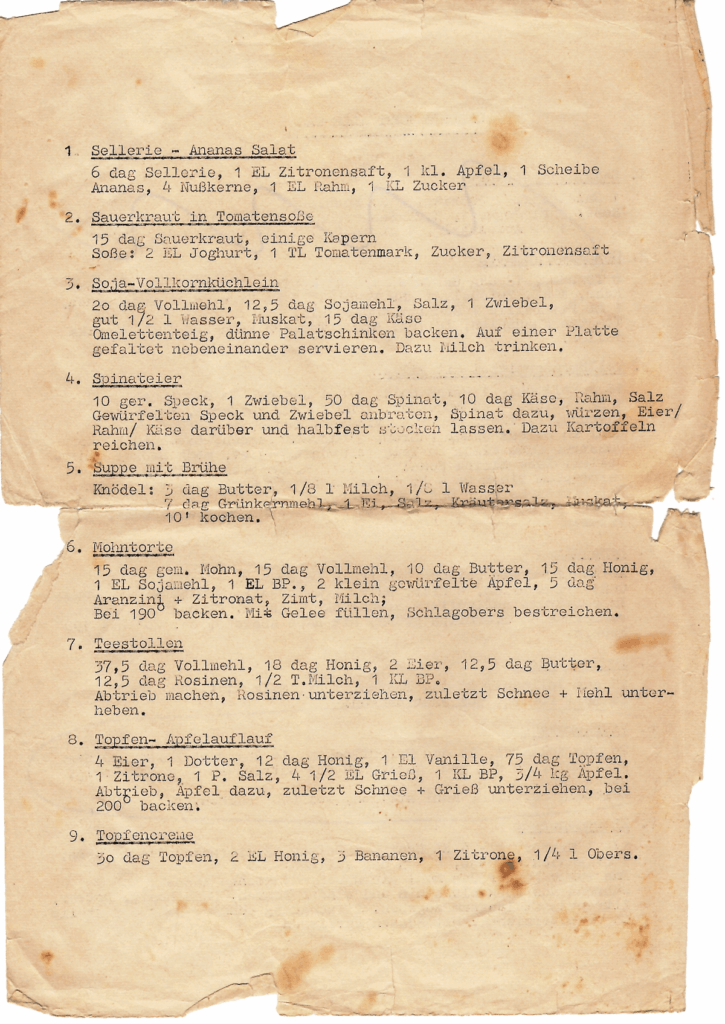
Photo by the author / 2026
You can download the original image here.
Open the image and right-click to save it.
This recipe is the 14th recipe in the full original recipe collection.
In the image used here, however, it appears as the 7th recipe because the image shows only one part of the collection.
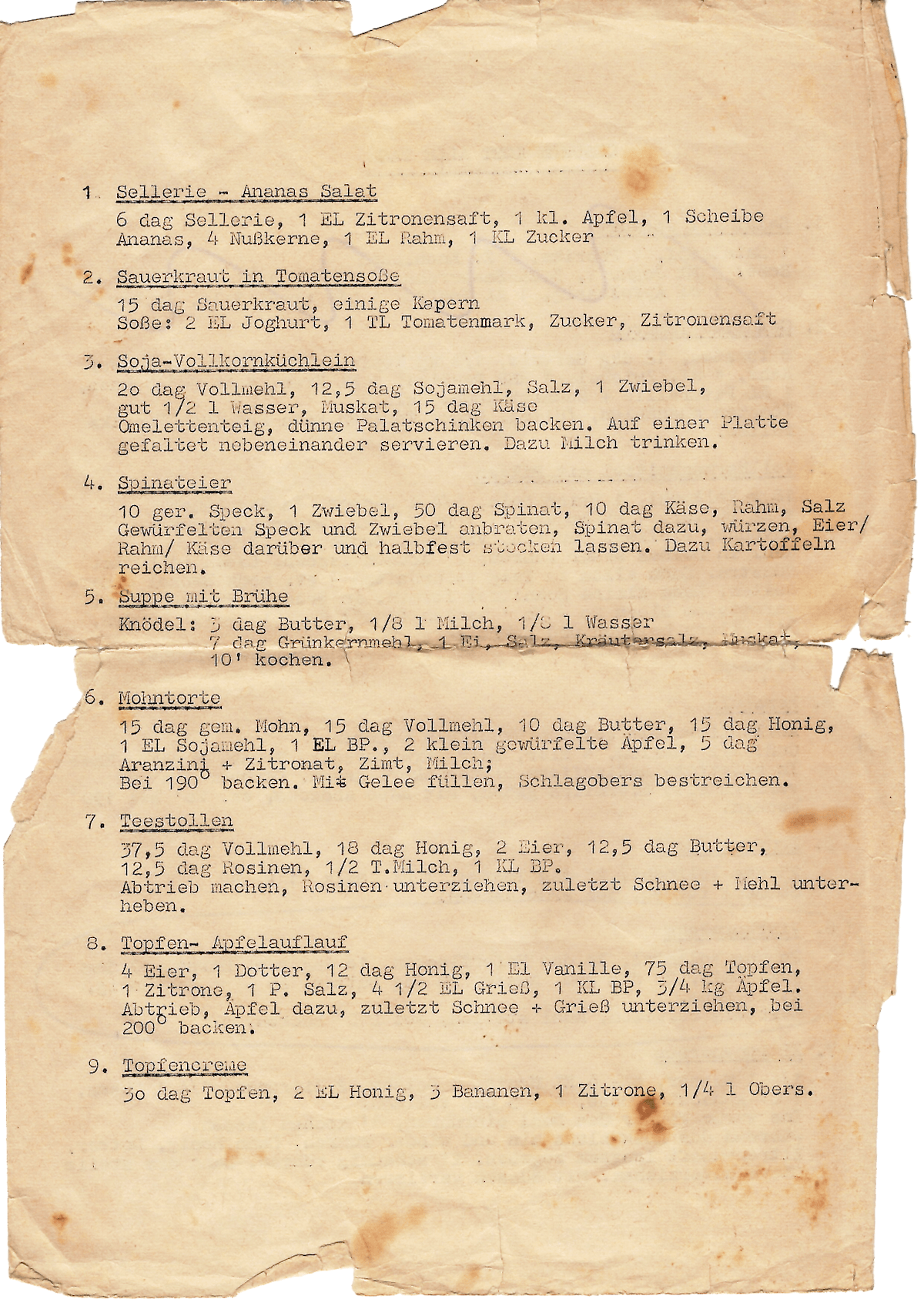
For consistency on this website, this recipe is listed as recipe no. 14.
Ingredients
- 375g wholemeal flour
- 180g honey
- 2 eggs
- 125g butter
- 125g raisins
- 500ml milk
- 1 small teaspoon baking powder
Notes on the Measurements
The original recipe uses the old Central European unit dag.
1 dag = 10g
So in this recipe:
37.5 dag wholemeal flour = 375g wholemeal flour
18 dag honey = 180g honey
12.5 dag butter = 125g butter
12.5 dag raisins = 125g raisins
The original recipe also uses:
1/2 l milk = 500ml milk
The abbreviation KL most likely means Kaffeelöffel, or a small spoon. In a modern recipe, this is close to a small teaspoon.
The abbreviation BP most likely stands for Backpulver, which means baking powder.
Notes on the Ingredients
Wholemeal Flour
The original recipe uses Vollmehl, which means wholemeal or whole-grain flour.
Wholemeal flour gives the tea loaf a more rustic flavor than plain white flour. It also absorbs more liquid, which explains why the recipe includes a relatively generous amount of milk.
Honey
This tea loaf is sweetened with honey instead of white sugar. The flavor will depend a little on the honey used.
A mild flower honey will make the loaf softer and more delicate in flavor. A darker honey will give it a deeper, stronger taste.
Raisins
The original note says that the raisins should be folded into the batter.
If the raisins are soft, they can be used as they are. If they are very dry, they can be soaked briefly in warm water or milk, then drained well before adding them to the batter.
Egg Whites
The word Schnee in old Austrian recipes usually means beaten egg whites.
In this recipe, the egg whites are beaten until stiff and folded in at the end. This helps make the loaf a little lighter.
How to Make
- Prepare the ingredients
Measure the wholemeal flour.
Mix the baking powder into the flour.
Prepare the raisins. If they are very dry, soak them briefly and drain them well.
Separate the eggs, because the egg whites will be beaten later. - Soften the butter
Take the butter out of the refrigerator in advance.
It should be soft enough to mix easily with the honey.
If the butter is too hard, it will be difficult to make a smooth creamed base. - Make the creamed base
Place the butter and honey in a mixing bowl.
Stir until they form an even mixture.
Add the egg yolks one at a time and continue mixing.
This is the base referred to in the original recipe. - Add the milk
Gradually add the milk to the butter, honey, and egg yolk mixture.
Stir gently while adding it.
The mixture may look quite loose because of the amount of milk, but that is natural for this recipe. - Fold in the raisins
Add the raisins to the mixture.
Fold them in gently so they are evenly distributed.
Avoid stirring too heavily, as this can make the batter denser. - Beat the egg whites
Place the egg whites in a clean bowl.
Beat until stiff peaks form.
The egg whites should be firm, but not dry. - Fold in the flour and egg whites
Add the flour mixed with baking powder to the batter.
Add the beaten egg whites as well.
Fold everything together gently until the batter is even.
Mix only until no large pockets of flour remain. - Prepare the baking tin
Grease a loaf tin or a stollen-style tin.
Pour in the batter and smooth the top.
The original recipe does not mention a tin size, so it is better not to use a very large tin. Otherwise, the loaf may become too flat. - Bake the tea loaf
The original recipe does not give a baking temperature or baking time.
For a modern kitchen, bake it at a moderate temperature, around 180℃.
The loaf is done when it feels set and a skewer inserted into the center comes out without wet batter. - Let it cool
Remove the tea loaf from the oven.
Let it rest briefly in the tin.
Then carefully remove it and allow it to cool completely before slicing.
Tips for Success
Use soft butter.
Soft butter mixes more easily with honey and helps create a smoother base.
Fold in the beaten egg whites gently.
Strong stirring can knock out the air and make the loaf heavier.
Drain soaked raisins well.
If the raisins are too wet, they may add too much extra moisture to the batter.
Use the skewer test.
Since the original recipe does not give a baking time, the skewer test is the safest way to check whether the loaf is fully baked.
Taste and Texture
This tea loaf is mildly sweet, soft, and rustic. The honey gives it a warm sweetness, while the raisins add small fruity pockets throughout the loaf.
Because it is made with wholemeal flour, it is not as light as a plain white sponge cake. It has a more grounded, satisfying texture.
It is the kind of simple cake that suits a quiet afternoon with tea or coffee.
What Does “Abtrieb” Mean?
The original German recipe says Abtrieb machen.
In older Austrian recipes, this usually means making a creamed base from butter, a sweet ingredient, and egg yolks.
In this recipe, the base is made from butter, honey, and egg yolks. After that, milk, raisins, flour, and beaten egg whites are added.
Can This Tea Loaf Be Made Ahead?
Yes, this tea loaf can be made ahead.
It can be baked the day before and stored well covered once cooled. In fact, it may taste even better after a few hours, once the flavors have had time to settle.
To prevent it from drying out, keep it wrapped or stored in an airtight container.
It can also be sliced and frozen. Let the slices thaw at room temperature before serving.
Serving Ideas
This tea loaf goes well with black tea, herbal tea, or coffee.
Because it already contains honey and raisins, it does not need a glaze. It can be served plain.
For a slightly richer serving, it can be spread with a little butter, honey, or fruit jam.
Frequently Asked Questions
What is a tea loaf?
A tea loaf is a simple cake or loaf served with tea or coffee. In this recipe, it is a modest honey and raisin loaf made with wholemeal flour.
Is this the same as Christmas stollen?
No. Although the original name includes Stollen, this recipe is much simpler than a traditional Christmas stollen. It does not include a rich yeast dough, marzipan, or many festive spices.
What does “Schnee” mean in the original recipe?
In old Austrian recipes, Schnee usually means beaten egg whites. The egg whites are whipped until stiff and folded into the batter.
What does “KL BP” mean?
KL most likely means a small spoon, similar to a small teaspoon. BP stands for Backpulver, or baking powder.
Can I use plain white flour instead of wholemeal flour?
Plain white flour can be used, but it will change the character of the recipe. Wholemeal flour gives the tea loaf its rustic taste and more substantial texture.
Do the raisins need to be soaked?
The original recipe does not say to soak them. If the raisins are soft, they can be added directly. If they are very dry, a short soak can help, but they should be drained well before use.
Summary
This tea loaf is a simple home recipe from Helga’s first handwritten recipe collection. Wholemeal flour, honey, butter, eggs, milk, and raisins come together to make a modest cake that suits tea or coffee.
The handwritten note is brief, but it shows a very typical style of home cooking: a few basic ingredients, simple preparation, and a result that is practical, gentle, and comforting.This recipe is part of Grandma Helga’s First Home Recipes, a small collection of simple dishes based on her handwritten notes.