Austrian Sweet Pull-Apart Buns are small sweet yeast buns based on an old handwritten recipe for Dukatenbuchteln. The original note gives only the essential steps: prepare a yeast dough, shape it into thumb-sized pieces, place them in warm milk and fat, let them rise, bake them, and serve them with a warm vanilla cream.
What makes this recipe special is not a complicated method, but the way a few basic ingredients become a soft and comforting sweet dish. The buns are smaller than many familiar sweet rolls, and the warm vanilla cream makes them feel more like a homestyle dessert or sweet meal than a simple bread roll.
About these Austrian Sweet Pull-Apart Buns
These Austrian Sweet Pull-Apart Buns are small sweet yeast buns baked close together in a pan with milk and fat.
They are related to Austrian and Central European sweet yeast dishes, and the original note also describes them as Dampfnudeln.
After baking, they are served with a warm vanilla cream. This makes them soft, rich, and comforting.
They can be enjoyed as a sweet main dish, a warm dessert, or a special afternoon treat.
About the original recipe name
The original handwritten recipe title is:
Dukatenbuchteln (Dampfnudeln)
Buchteln are sweet yeast buns that are often baked close together.
Dukaten suggests a small, coin-like or delicate shape.
Dampfnudeln refers to soft yeast dumplings or buns cooked with steam or moisture.
For English readers, I am introducing this recipe as:
Austrian Sweet Pull-Apart Buns
This title makes the dish easier to understand in English, while the original name Dukatenbuchteln is still kept in the explanation. It also helps readers picture the recipe more clearly: small sweet yeast buns, baked close together and served warm with vanilla cream.
Original Image
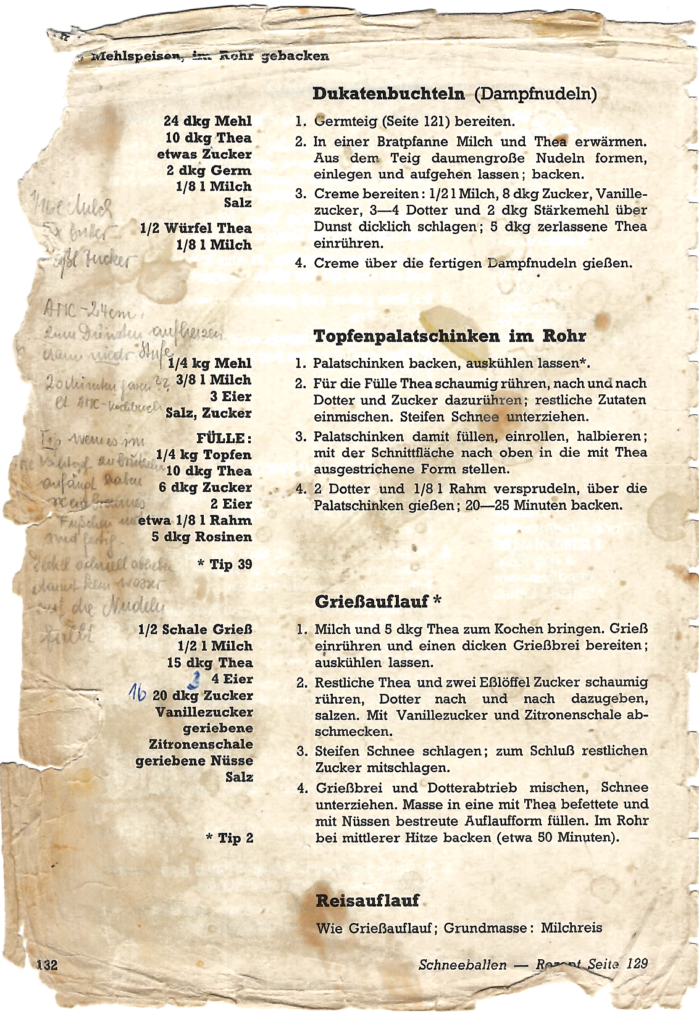
Photo by the author, 2026
Open the image and save it with a right click.
This is the first recipe shown in the image.
Note on the old recipe
This recipe is based on the old printed note. The readable ingredients and steps are kept, while unclear or old-fashioned details are gently adapted for a modern home kitchen. Terms such as Thea, Germ, dkg, and Rohr are explained so that the recipe can be understood outside its original setting.
Ingredients
For the dough
- 240 g flour
- 100 g Thea, margarine, or butter
- a little sugar
- 20 g fresh yeast
- 125 ml milk
- a pinch of salt
For the baking pan
- about 1/2 cube Thea, margarine, or butter
- 125 ml milk
For the vanilla cream
- 500 ml milk
- 80 g sugar
- vanilla sugar
- 3 to 4 egg yolks
- 20 g cornstarch or potato starch
- 50 g melted Thea, margarine, or butter
Notes on Measurements
The original recipe uses dkg, also written as decagrams.
1 dkg = 10 g
So the original amounts become:
24 dkg flour = 240 g
10 dkg Thea = 100 g
2 dkg yeast = 20 g
8 dkg sugar = 80 g
2 dkg starch = 20 g
5 dkg Thea = 50 g
1/8 liter milk is about 125 ml.
1/2 liter milk is about 500 ml.
“Thea” was a margarine brand often found in older Austrian recipes. Today, butter or margarine can be used. Margarine keeps the recipe closer to the old household style, while butter gives a richer flavor.
Ingredient Notes
Yeast
The German word “Germ” means yeast in Austrian German.
The original recipe uses fresh yeast.
If using dry yeast, use a smaller amount and follow the conversion on the package. The dough may need a slightly different rising time.
Thea
Thea was a common margarine used in everyday baking and cooking.
It appears in the dough, in the baking pan, and in the vanilla cream.
Using margarine keeps the recipe closer to its old household style. Butter gives a fuller, more aromatic taste. Both can work.
Milk
Milk is used in the dough and also in the baking pan.
The milk in the pan helps keep the small buns moist while they bake.
This is one reason the recipe is also connected with Dampfnudeln, which are soft yeast dumplings or buns made with moisture and steam.
Vanilla sugar
Vanilla sugar gives the cream its gentle vanilla flavor.
If vanilla sugar is not available, use a little vanilla extract with regular sugar.
Starch
The starch thickens the cream.
Cornstarch is the easiest modern substitute in many kitchens.
Because the cream contains egg yolks, it should be heated gently and stirred constantly.
Substitutions for readers outside German-speaking countries
This recipe is easy to adapt because the ingredients are basic.
Fresh yeast can be replaced with dry yeast, but the amount should be reduced.
Thea can be replaced with margarine or unsalted butter.
Vanilla sugar can be replaced with sugar and vanilla extract.
Cornstarch can be used instead of the older term “Stärkemehl.”
For the closest homestyle result, use margarine in the dough and cream. For a more aromatic version, use butter.
How to Make
1. Make the yeast dough
Combine flour, softened Thea, margarine, or butter, a little sugar, yeast, milk, and salt.
Knead until the dough becomes smooth and soft.
The dough should be elastic but not dry.
2. Let the dough rise
Cover the dough and let it rise in a warm place.
It should visibly increase in size.
The exact time depends on the room temperature and the type of yeast used.
3. Prepare the pan
Warm the milk and Thea, margarine, or butter in a baking pan or oven-safe skillet.
The mixture should be warm, not boiling.
It will keep the small buns moist while they bake.
4. Shape the dough
Take small pieces of dough and shape them into thumb-sized buns.
Place them into the prepared pan.
Leave a little space between each piece, because they will rise again.
5. Let them rise again
Cover the pan and let the dough pieces rise once more.
They should become lighter and slightly larger before baking.
This second rise helps the finished buns stay soft.
6. Bake
Bake in a preheated oven at medium heat until the buns are cooked through and lightly golden.
Depending on the size of the pan, this may take about 25 to 35 minutes.
The tops should be lightly browned, while the inside remains soft.
7. Make the vanilla cream
Combine milk, sugar, vanilla sugar, egg yolks, and starch.
Whisk over gentle heat or over a water bath until the cream thickens.
Keep stirring so it stays smooth.
8. Add the melted fat
Stir the melted Thea, margarine, or butter into the warm cream.
Mix until smooth and glossy.
Do not boil the cream strongly.
9. Serve
Pour the warm vanilla cream over the finished Dukaten Buchteln.
Serve immediately while soft and warm.
Tips for Success
Give the dough enough time
The dough needs time to rise properly.
If the kitchen is cool, the rising time may be longer.
Keep the buns small
The original recipe describes thumb-sized pieces.
Small buns bake evenly and suit the old name Dukaten Buchteln.
Do not overheat the milk in the pan
The milk and fat should be warm, not boiling.
If the mixture is too hot, it can affect the dough before it rises properly.
Do not boil the cream too strongly
The cream contains egg yolks.
Gentle heat keeps it smooth, while strong heat can make it curdle.
Serve while warm
This dish is best when the yeast buns are still soft and the cream is warm.
Once cold, the texture becomes firmer.
Taste and Texture
Austrian Sweet Pull-Apart Buns are soft, mildly sweet, and warm.
The yeast dough has a gentle richness from the fat, while the vanilla cream adds sweetness and moisture.
The texture is tender rather than fluffy like a modern cake. It feels closer to a warm homemade pudding-like yeast dish.
Because the buns are small, the cream reaches them easily and makes the whole dish feel soft and comforting.
Make-Ahead and Storage
This recipe is best eaten fresh.
The buns can become firmer as they cool, and the cream tastes best when freshly made.
If there are leftovers, store the buns and cream separately if possible.
Keep the cream in the refrigerator and reheat it gently. Do not boil it after storage.
The buns can be warmed briefly before serving.
Serving Ideas
Dukaten Buchteln can be served with:
- warm vanilla cream
- powdered sugar
- stewed plums
- apple compote
- apricot compote
- coffee or tea
Since the vanilla cream is already part of the recipe, a fruit compote is a good choice if you want contrast.
Questions and Answers
Final Thoughts
Austrian Sweet Pull-Apart Buns show how a simple yeast dough can become a warm and memorable sweet dish. The old recipe uses only a few ingredients, but the method gives them a soft texture: the small dough pieces rise in a pan with milk and fat before they are baked.
The older terms in the recipe are part of its charm, but they also need a little explanation today. Thea can be replaced with margarine or butter, Germ means fresh yeast, and dkg needs to be converted into grams.
Served warm with vanilla cream, these small yeast buns keep the feeling of an old Austrian home recipe while still being practical for a modern kitchen.
About Grandma Helga
Grandma Helga is a mother and grandmother who spent many years cooking for her family.
The recipes shared on this site are the ones she prepared in her everyday life.
They have been carefully preserved from her handwritten notes and passed down over time.
Today, her family organizes, translates, and shares them so they can continue to be enjoyed.
All recipes are simple, reliable, and made for real daily cooking.