

This salad is a simple dish finished with a light and refreshing yogurt dressing.
It belongs to simple Austrian home cooking and is made with fresh lettuce, bell pepper, garlic, yogurt, sour cream, a little Topfen or Quark, vinegar, oil, and horseradish.
The original handwritten recipe does not always include exact amounts, temperatures, or every small step.
In this version, the spirit of Helga’s original recipe is kept, while the method is explained in a way that makes the dish easier to prepare in a modern kitchen.
This recipe is No. 1 in the “Healthy Everyday Meals” series.
Ingredients
For about 2 to 4 servings:
- 1 head of lettuce
- 1 bell pepper
- 1 clove of garlic
- 3 tbsp yogurt
- 3 tbsp sour cream
- 2 tbsp oil
- 1 tsp flaxseed oil
- 1 tbsp apple cider vinegar
- 1 tbsp Quark or Topfen
- a pinch of horseradish
- salt, to taste
- sugar, to taste
If the handwritten recipe did not include exact quantities, the amounts here have been adjusted as a practical guide for modern home cooking.
How to Make It
1. Prepare the vegetables
Wash the lettuce and bell pepper thoroughly.
Drain and dry them well. This is important because too much water on the vegetables can dilute the dressing.
2. Cut the vegetables
Tear the lettuce into bite-sized pieces.
Slice the bell pepper into thin strips or small pieces, depending on how you would like to serve the salad.
3. Prepare the garlic
Peel the garlic clove and mince it very finely.
If you prefer a milder flavor, use only a small amount at first. Fresh garlic can taste quite strong in a cold dressing.
4. Make the yogurt dressing
In a bowl, combine the yogurt, sour cream, oil, flaxseed oil, apple cider vinegar, Quark or Topfen, horseradish, salt, and sugar.
Stir everything well until the dressing is smooth and evenly blended.
5. Adjust the flavor
Add the minced garlic to the dressing and mix again.
Taste the dressing and adjust the seasoning. A small amount of sugar can soften the acidity of the yogurt and vinegar.
6. Combine the salad
Place the prepared lettuce and bell pepper in a large bowl.
Add the dressing just before serving and gently toss everything together.
7. Serve fresh
Serve the salad immediately.
This keeps the lettuce crisp and prevents the dressing from becoming watery.
Tips for Best Results
- Dry the lettuce well after washing so the dressing coats the leaves properly.
- Prepare the dressing a little ahead of time if you want the flavors to blend.
- Toss the salad only shortly before serving.
- Start with a small amount of garlic and adjust after tasting.
Old handwritten family recipes are often less exact than modern recipes. It helps to pay attention to the look, texture, and taste of the dish, not only the written amounts.
Common Problems and How to Fix Them
The salad becomes watery
This usually happens when the lettuce is still too wet after washing.
Drain the vegetables well before mixing them with the dressing. A salad spinner is helpful, but careful draining also works.
The dressing tastes too sour
Yogurt, sour cream, and vinegar all bring acidity to the dressing.
If the flavor is too sharp, add a small pinch of sugar. You can also add a little more sour cream or a mild oil to make the dressing taste rounder.
The garlic flavor is too strong
Fresh garlic can become quite noticeable in a cold yogurt dressing.
Use a smaller amount if you prefer a milder flavor. You can also let the dressing rest for a few minutes and taste it again before adding more.
Ingredient Substitutions and Notes
This dressing is flexible and can be adjusted depending on what you have at home.
The main ingredients are yogurt, sour cream, Quark or Topfen, oil, vinegar, garlic, and a small amount of horseradish.
If the recipe uses Topfen or Quark
If this recipe uses Topfen or Quark, use it if you can find it.
If it is not available, you can use a substitute depending on the recipe. Possible options include well-drained Greek yogurt, drained plain yogurt, smooth blended cottage cheese, ricotta, or a mixture of cream cheese and yogurt.
The flavor and texture will not be exactly the same. Topfen and Quark have their own mild tang and moisture level, so substitutes may make the dressing softer, creamier, or slightly more acidic.
For this salad dressing, the substitution is easier than in baked recipes. Just make sure the dressing does not become too thin.
Sour cream
Sour cream adds mild acidity and creaminess.
If you do not have sour cream, you can use cream with a small amount of lemon juice. This gives the dressing a gentle tangy note.
Apple cider vinegar
Apple cider vinegar works well because it is mild and slightly fruity.
If you do not have it, use another mild vinegar. Add it gradually and taste the dressing before adding more.
Horseradish
Horseradish gives the dressing a small amount of sharpness.
If it is not available, you can leave it out or use a little extra finely minced garlic. The taste will be different, but the dressing will still have a pleasant savory note.
Flaxseed oil
Flaxseed oil has a distinctive flavor and should be used in a small amount.
If you do not have it, you can use a neutral oil instead. The dressing will taste milder, but it will still work.
What Does It Taste Like?
This dish tastes fresh, mild, creamy, and lightly tangy.
It is not a heavily seasoned modern salad. It is closer to simple Austrian home cooking, where the flavor comes from fresh vegetables, dairy, vinegar, garlic, and a small amount of horseradish.
The dressing is light enough for everyday meals, but still creamy enough to make a simple salad feel complete.
Storage
This salad tastes best when served fresh.
The dressing can be prepared a few hours ahead of time and kept covered in the refrigerator.
The lettuce should only be mixed with the dressing shortly before serving. Once the dressing is added, the salad will soften quickly.
Because the dressing contains dairy products, it should not be left at room temperature for a long time.
What to Serve With It
This recipe goes well with:
- simple potato dishes
- roasted or baked meat
- bread rolls or fresh bread
- cold plates and light lunches
- everyday family meals
The yogurt dressing also works well with coleslaw and other fresh vegetable salads.
Using the Yogurt Dressing for Coleslaw
I also tried using this yogurt dressing to make a simple coleslaw.
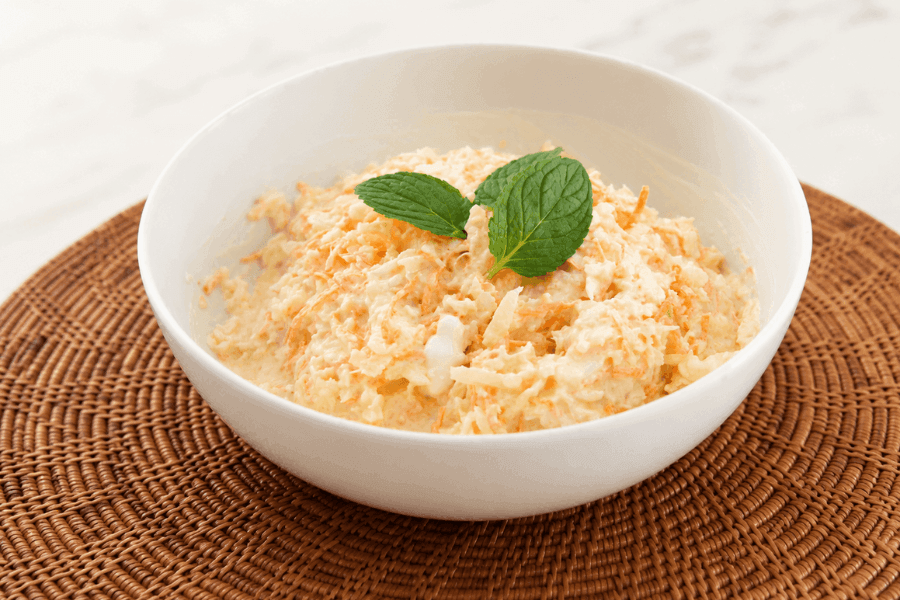
Coleslaw with yogurt dressing. Photo by the author, 2026.
For this version, I used what I already had at home rather than following the ingredient list exactly. Some of the original ingredients were not available, so I adjusted the dressing with a few simple substitutions.
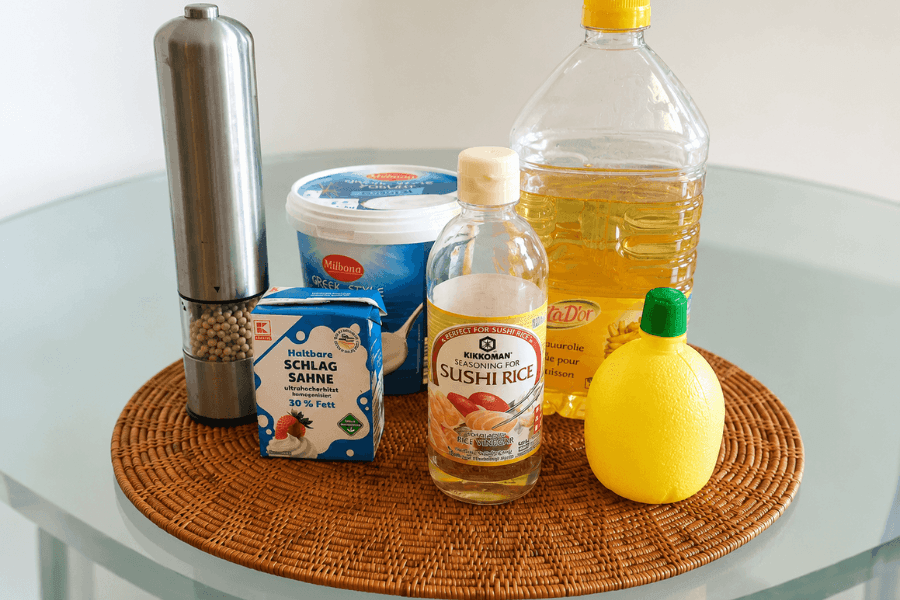
Ingredients used for the adapted yogurt dressing. Photo by the author, 2026.
The yogurt was used as written in the recipe. Since I did not have Quark or Topfen, I replaced it with a mixture of yogurt and a little cream.
I also did not have sour cream, so I used cream with a small amount of lemon juice to add a light tangy note.
Fresh lemon was not available either, so I used bottled lemon juice instead. For the apple cider vinegar, I used a mild vinegar I already had in the kitchen.
Horseradish was also not available, so I used finely chopped garlic instead. This gave the dressing a different kind of sharpness and added a pleasant savory flavor.
Even with these substitutions, the coleslaw turned out very tasty.
Compared with a more traditional creamy coleslaw, this version felt lighter and fresher. The gentle acidity of the yogurt dressing worked well with the cabbage and carrots and gave the salad a mild but refreshing flavor.
Because cream was added, the dressing still had a little richness. At the same time, it did not feel heavy, which made it easy to serve as a side dish.
At first, I prepared the dressing according to the original quantities. However, when mixing it with the vegetables, I noticed that it was not quite enough to coat everything evenly.
In the end, I made a second portion of the dressing and added a little more.
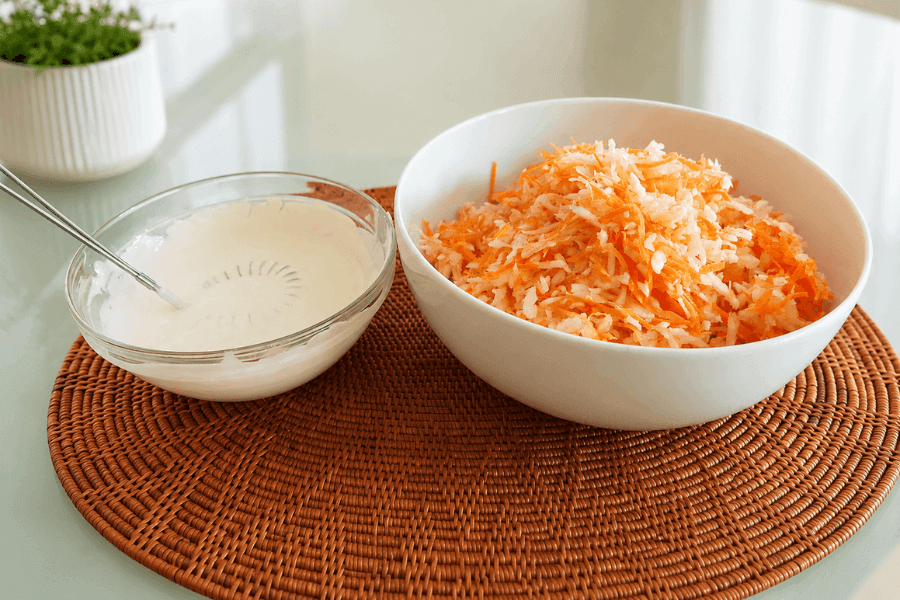
Prepared vegetables and yogurt dressing before mixing. Photo by the author, 2026.
When using this dressing for coleslaw, the amount needed depends on how many vegetables you use and how much moisture they release.
Preparing a little extra dressing from the beginning can make it easier to mix everything well.
This was a good reminder that the dressing is quite flexible. Even when the exact ingredients are not on hand, a combination of yogurt, cream, lemon juice, and a mild vinegar can still create a fresh and pleasant dressing.
It is an easy dressing to adapt with everyday ingredients, and it works very nicely with coleslaw.
The Original Handwritten Recipe
This recipe is based on one of Helga’s handwritten recipes.
Old family recipes often include only the most important notes. Exact amounts, temperatures, or small steps were sometimes left out because the cook already knew them by heart.
For this article, the original recipe has been carefully adapted into a version that is easier to follow in a modern kitchen.

Helga’s original handwritten recipe. This version keeps the spirit of the original
while making the steps easier to follow today. Photo by the author, 2026.
You can download the original image here.
Open the image and right-click to save it.
This recipe is No. 1 in the “Healthy Everyday Meals” series.
Memories Behind This Recipe
This recipe belongs to the “Healthy Everyday Meals” series.
The title already shows that this was not meant to be a complicated dish for a special occasion. It was a simple, practical recipe for daily meals.
That is exactly what makes recipes like this meaningful in an old handwritten collection.
They show how a few familiar ingredients can become something fresh, useful, and easy to serve with many different meals.
I also like how flexible this dressing is. Even when I did not have all the original ingredients, it was still possible to make a good dressing with what I had at home.
For me, this recipe is a reminder that everyday cooking does not always need to be exact. Sometimes a handwritten recipe gives the direction, and the cook adjusts it gently to the kitchen of the day.
Frequently Asked Questions
Summary
Yogurt Dressing Salad is a simple everyday recipe from Helga’s handwritten collection.
The dressing is fresh, creamy, lightly tangy, and flexible enough to use not only for lettuce salad but also for coleslaw and other vegetable salads.
The most important points are drying the vegetables well, tasting the dressing before serving, and mixing the salad only shortly before it is eaten.
This version keeps the character of Helga’s handwritten recipe while making it easier to prepare in a modern kitchen.
About Grandma Helga
Grandma Helga is a mother and grandmother who spent many years cooking for her family.
The recipes shared on this site are the ones she prepared in her everyday life.
They have been carefully preserved from her handwritten notes and passed down over time.
Today, her family organizes, translates, and shares them so they can continue to be enjoyed.
All recipes are simple, reliable, and made for real daily cooking.