These soy flour and wholegrain pancakes are one of the early home-cooking recipes that Grandma Helga wrote down when she was still becoming familiar with cooking.
The original handwritten note is very short, but it clearly points to a simple, nourishing dish made with wholegrain flour, soy flour, onion, cheese, water, and a little nutmeg.
In this version, the original ingredients and quantities are kept as closely as possible, while the method and ingredient notes are explained in more detail so the recipe can be prepared more easily in a modern kitchen.
About These Soy Flour and Wholegrain Pancakes
Soy flour and wholegrain pancakes are not sweet breakfast pancakes. They are thin, savory pancakes that can be served as a light main dish, a simple lunch, or a filling side.
The wholegrain flour gives the pancakes a rustic flavor and a slightly earthy character. The soy flour adds body and a gentle nuttiness, making the pancakes more satisfying than a plain flour batter.
Onion brings mild sweetness, cheese adds richness, and a small amount of nutmeg gives the dish a warm background note. The result is a modest but comforting everyday recipe.
When spread thinly in the pan, the pancakes are closer to savory crepes than thick breakfast pancakes. They can be folded before serving, which makes them easy to plate and pleasant to eat.
About the Original Recipe Name
In the original handwritten note, the dish appears as a simple flour-based pancake recipe using soy flour and wholegrain flour.
For this English version, the recipe is introduced as:
Soy Flour and Wholegrain Pancakes
The name is chosen to make the dish easy to understand for modern readers. “Soy flour” is more precise than simply saying “soy,” because the recipe does not use whole soybeans, but flour made from soybeans.
These pancakes belong to the kind of practical home cooking where a few basic ingredients are combined into a filling meal. They are simple, unfussy, and very much in the spirit of everyday Central European family cooking.
Original Image
“Healthy Everyday Meals”
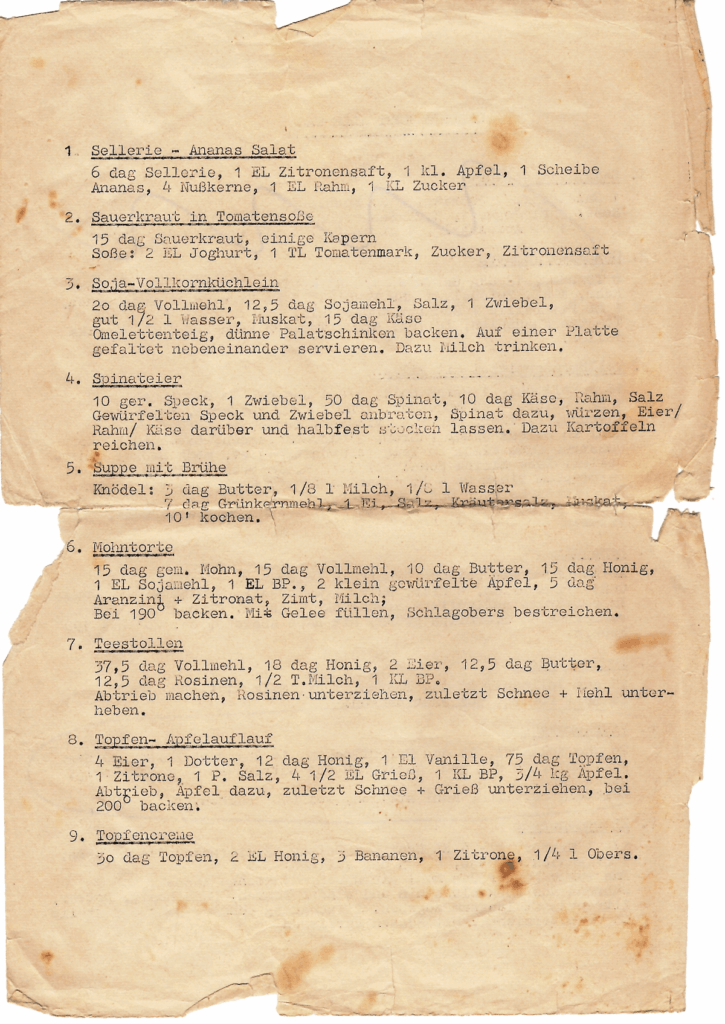
Photo by the author / 2026
You can download the original image here.
Open the image and right-click to save it.
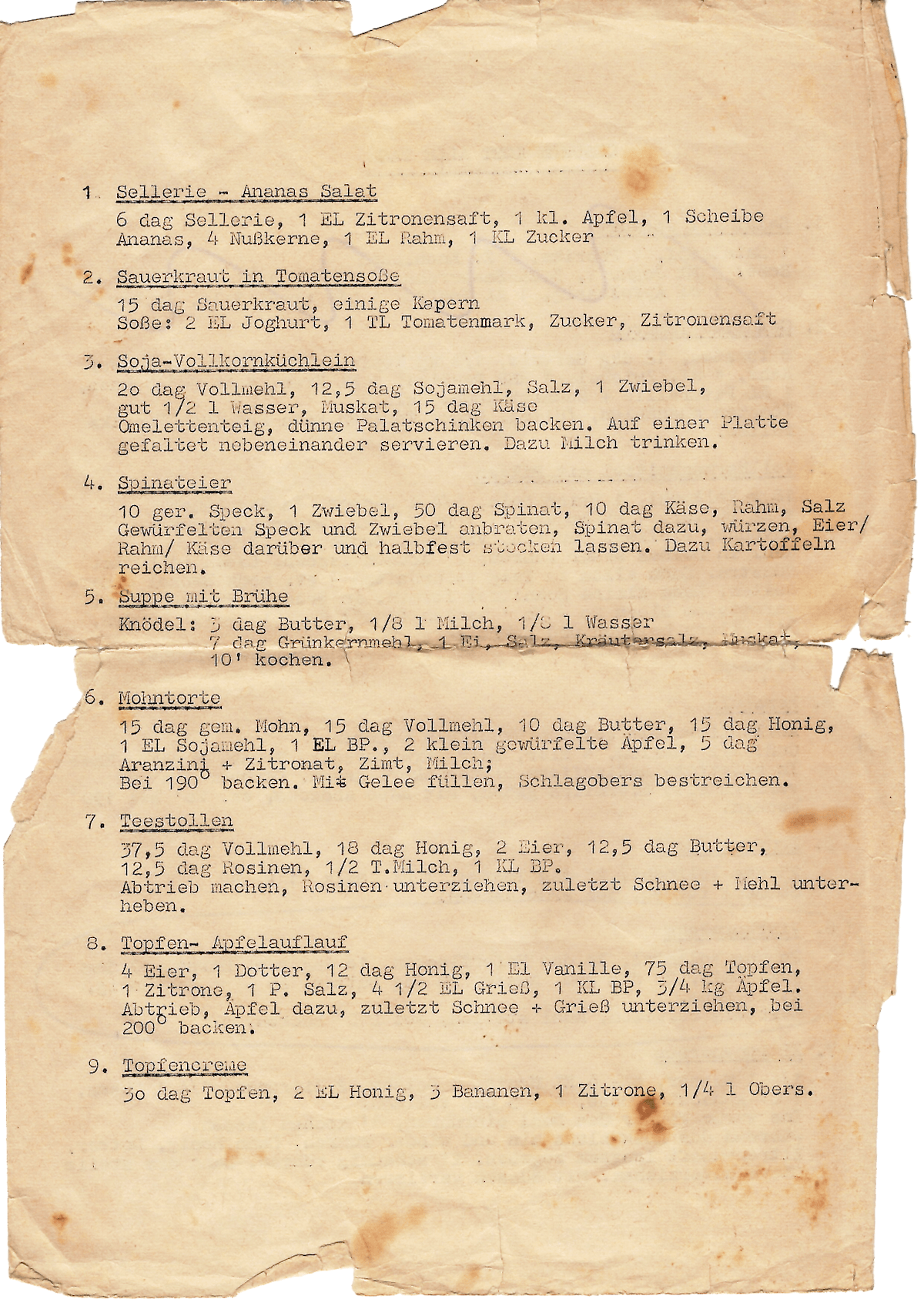
This recipe is the 10th recipe in the full original recipe collection.
In the image used here, however, it appears as the 3rd recipe because the image shows only one part of the collection.
For consistency on this website, this recipe is listed as recipe no. 10.
Ingredients
- 200 g wholegrain flour
- 125 g soy flour
- A little salt
- 1 onion
- about 500 ml water
- A little ground nutmeg
- 150 g cheese
- A little oil for frying
Notes on Measurements
The original handwritten recipe used the unit dag.
1 dag equals 10g.
For this recipe, the converted quantities are:
20 dag wholegrain flour = 200g
12.5 dag soy flour = 125g
15 dag cheese = 150g
The amount of water is about 500ml.
Depending on the flour you use, the batter may need a little more or less water. Wholegrain flour and soy flour can absorb liquid differently, so it is best to add the water gradually and adjust the texture as you mix.
Ingredient Notes
Wholegrain Flour
Wholegrain flour gives these pancakes their rustic taste and firmer texture.
Because it contains more of the grain than refined white flour, it adds a deeper flavor and a more substantial bite. This is part of what makes the dish feel satisfying even though the ingredient list is short.
Wholegrain flour can make the batter thicker as it rests. If the batter becomes difficult to spread in the pan, stir in a little more water before cooking the next pancake.
Soy Flour
Soy flour is made from ground soybeans.
In this recipe, it adds a mild nutty flavor and makes the pancakes feel more filling. It also changes the texture slightly, giving the batter more body than a simple wheat-flour mixture.
Some soy flours have a stronger aroma than others. If yours has a noticeable soybean scent, the onion, cheese, and nutmeg help balance it in the finished pancakes.
Cheese
The original note does not specify which kind of cheese should be used.
A mild cheese that melts well is a good choice. Gouda, Emmental, mild cheddar, or a simple grated melting cheese can all work.
The cheese adds richness and helps bring the batter together. If you use a cheese that is already quite salty, reduce the added salt slightly.
Onion
The onion should be chopped finely so it blends into the batter.
Large pieces can make the pancakes harder to spread thinly and may not cook evenly. Finely chopped onion gives a gentle sweetness without overpowering the flour and cheese.
Nutmeg
Nutmeg is used only as a seasoning.
A small pinch is enough. It should support the flavor of the cheese and onion, not dominate the dish.
Substitutions and Practical Options
This recipe is fairly easy to prepare with everyday ingredients, but soy flour and wholegrain flour may not always be available in every kitchen.
If You Do Not Have Soy Flour
You can replace part of the soy flour with a mild flour such as plain flour or more wholegrain flour.
In some countries, roasted soybean flour or kinako may be easier to find. This can be used in small amounts, but it has a stronger aroma and a slightly sweeter taste. For that reason, it is better to replace only part of the soy flour rather than the full amount.
If You Do Not Have Wholegrain Flour
Plain flour can be used, but the result will be lighter and less rustic.
If you still want a hearty flavor, you can mix plain flour with a small amount of rye flour, spelt flour, or another wholegrain flour you have available.
If You Want a Milder Flavor
Use a mild melting cheese and go very lightly with the nutmeg.
This makes the pancakes softer in flavor and easier to serve with a simple salad or soup.
Instructions
1. Prepare the Onion and Cheese
Finely chop the onion.
The smaller the pieces, the more evenly they will cook in the batter.
Grate the cheese or cut it into very small pieces so it can spread through the mixture easily.
2. Mix the Dry Ingredients
Put the wholegrain flour, soy flour, and a little salt into a mixing bowl.
Stir them together before adding the water.
This helps the two flours combine evenly and makes the batter easier to mix.
3. Add the Water Gradually
Pour in the water little by little while stirring.
At first, the mixture may feel thick, but it will loosen as more water is added.
Continue mixing until you have a smooth batter that is thin enough to spread in a pan.
4. Add the Onion, Cheese, and Nutmeg
Add the chopped onion, cheese, and a small pinch of ground nutmeg.
Mix well so the onion and cheese are evenly distributed.
Make sure there are no heavy clumps of cheese at the bottom of the bowl.
5. Heat the Pan
Place a frying pan over medium heat.
Add a small amount of oil and spread it thinly over the surface.
The pan should be hot enough to cook the batter gently, but not so hot that the outside browns before the inside is done.
6. Cook the Pancakes Thinly
Add a ladleful of batter to the pan.
Tilt the pan or spread the batter gently so it forms a thin pancake.
Cook until the underside is golden and the top begins to set.
7. Turn and Finish Cooking
Turn the pancake carefully and cook the second side.
Keep the heat at medium so the pancake cooks through without burning.
The cheese may create small golden spots, which add flavor and texture.
8. Fold and Serve
Transfer the cooked pancake to a plate.
Fold it in half or into quarters, similar to a savory crepe.
Serve warm, either on its own or with a light side dish.
Tips for Best Results
- Keep the Batter Spreadable
- The batter should not be as thick as a cake batter.
- It needs to flow easily enough to make thin pancakes. If it becomes too thick while standing, add a small splash of water and stir again before cooking.
- Chop the Onion Finely
- Finely chopped onion cooks more evenly and blends better into the batter.
- This also makes the pancakes easier to fold after cooking.
- Use Nutmeg Carefully
- Nutmeg is helpful, but only in a small amount.
- Too much can hide the gentle flavor of the flour, cheese, and onion. A small pinch is enough to give warmth without making the spice obvious.
- Cook Over Medium Heat
- A moderate heat gives the best texture.
- If the pan is too hot, the outside may brown too quickly while the center remains heavy. Slower cooking gives a better balance between a lightly crisp surface and a soft interior.
Flavor and Texture
These soy flour and wholegrain pancakes have a savory, rustic flavor.
The wholegrain flour brings a warm grain taste, while the soy flour gives the pancakes more depth and a slightly nutty quality. The onion softens the flavor with mild sweetness, and the cheese adds a rounded, savory richness.
The texture is firmer than a delicate white-flour crepe, but still soft when the batter is spread thinly. They are not meant to be light and airy. Instead, they are simple, filling, and homely.
This is the kind of dish that feels practical rather than decorative: easy to make, satisfying to eat, and well suited to an everyday table.
Making Ahead and Storing
These pancakes can be made ahead.
Let them cool completely, then store them in a covered container in the refrigerator. Because they contain onion and cheese, they should not be left at room temperature for a long time.
For the best texture, reheat them gently in a pan over low to medium heat. This helps bring back a little of the surface crispness.
They can also be reheated in a microwave, but the texture will be softer. If possible, eat them within the next day.
How to Serve
These savory pancakes can be served simply, without much added to them.
They also go well with:
- A green salad
- Fresh tomatoes or cucumber
- A light yogurt sauce
- A bowl of vegetable soup
- A little sour cream with herbs
The dish is best kept simple. Heavy sauces can cover the gentle flavor of the wholegrain flour, soy flour, onion, and cheese.
Frequently Asked Questions
Conclusion
Soy flour and wholegrain pancakes are one of Grandma Helga’s early home-cooking recipes: simple, practical, and full of quiet comfort.
Made with wholegrain flour, soy flour, onion, cheese, and a little nutmeg, they are savory pancakes with a rustic flavor and a satisfying texture.
The original handwritten note is brief, but it reflects the kind of everyday cooking that turns a few basic ingredients into a warm and filling meal.
This recipe is part of Grandma Helga’s first home-cooking series. It preserves the character of the original handwritten recipe while making the method easier to follow for today’s home cooks.
About Grandma Helga
Grandma Helga is a mother and grandmother who spent many years cooking for her family.
The recipes shared on this site are the ones she prepared in her everyday life.
They have been carefully preserved from her handwritten notes and passed down over time.
Today, her family organizes, translates, and shares them so they can continue to be enjoyed.
All recipes are simple, reliable, and made for real daily cooking.