
This simple Austrian oven-roasted chicken comes from an old family recipe that was written with only a few short instructions. There is no long spice list, no marinade, and no complicated filling. The chicken is salted, placed in a roasting pan with a little water, and basted again and again with its own pan juices.
That simplicity is exactly what makes this recipe special.
In many older Austrian kitchens, recipes were not always written with precise measurements or detailed timing. The cook already knew what to look for: the color of the skin, the smell of the roasting juices, and whether the chicken was done. For a modern kitchen, the recipe needs a little more guidance, but the spirit of the dish stays the same. This is not a heavily seasoned roast chicken. It is a plain, honest oven-roasted chicken where the flavor comes from salt, fat, heat, and patient basting
About This Recipe
In the original German recipe, the dish is simply called Hendl.
In Austria and Bavaria, Hendl is a common word for chicken, especially roast chicken. The word Rohr means oven in Austrian German, so Hendl aus dem Rohr simply means chicken from the oven, or oven-roasted chicken.
The handwritten version uses very few ingredients:
- one whole chicken
- salt
- a little Thea
- a little water
Thea was a well-known Austrian margarine often used in older home cooking. Outside Austria, readers may not recognize the name, so in this version you can use regular margarine or butter instead. Margarine keeps the recipe closer to the old everyday style, while butter gives the chicken a richer aroma.
A Personal Memory
This roast chicken carries a very personal memory for me.
My mother-in-law used to make this chicken for us from time to time. At first, I remember feeling a little unsure. The ingredients were so simple that I quietly wondered whether it could really taste that good.
But this very simple roast chicken turned out to be one of the dishes I loved most. The seasoning was just right, the meat was tender and juicy, and the pan juices had that warm, comforting flavor that only a family recipe can have. Over time, it became one of the recipes I asked her to make again and again.
What I still remember clearly is how carefully she prepared the chicken. She was a very precise person and handled raw poultry with great care. The chicken was prepared thoroughly, dried carefully, and while it was roasting in the oven, the kitchen was cleaned just as thoroughly.
At the time, that level of care surprised me a little. Now, I look back on it with a smile. It was simply very much like her: calm, exact, and deeply careful about putting something good and safe on the table for her family.
In this modern version, washing the chicken is not presented as the recommended method. The important point is to pat it very dry so the skin can brown well in the oven. But for me, the memory of her careful, quiet way in the kitchen will always belong to this recipe.
Original Recipe
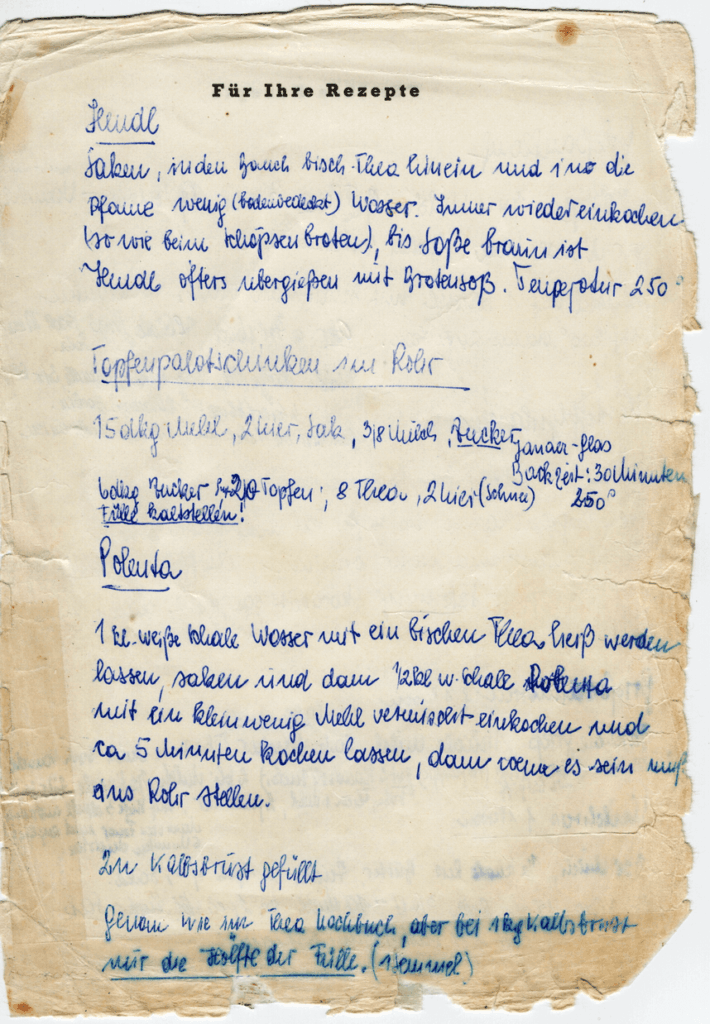
Photo by the author, 2026
Open the image and save it with a right click.
A Note on the Old Recipe
The original recipe is very short, which is typical of many family recipes passed down on paper. It says to salt the chicken, put a little Thea inside, place it in a pan with a little water, roast it in the oven, and baste it often with the pan juices.
The old note also mentions 250°C, which is a very hot oven. That may have worked well with the oven used at the time, but modern ovens can brown food very quickly at that temperature. For that reason, this version starts with high heat and then lowers the temperature so the chicken can brown without drying out too fast.
Ingredients
For 1 whole chicken:
- 1 whole chicken, about 1.2 to 1.5 kg / 2.6 to 3.3 lb
- salt
- 1 to 2 tablespoons margarine or butter
- a small amount of water for the roasting pan
Optional, but still simple:
- a little black pepper
- a small extra piece of butter or margarine for rubbing over the skin
If you want to stay very close to the old Austrian recipe, use only chicken, salt, margarine or butter, and water.
Ingredient Notes
Chicken
A whole chicken of about 1.2 to 1.5 kg works well for this recipe. A smaller chicken will cook faster, while a larger one will need more time.
For the best result, take the chicken out of the refrigerator a little before roasting so it is not completely cold when it goes into the oven. This helps it cook more evenly.
The most important point is not only that the skin looks nicely browned, but that the chicken is fully cooked inside.
Thea, Margarine, or Butter
The original recipe uses Thea, an Austrian margarine that appears in many older recipes.
In this dish, the fat is placed inside the chicken. As it melts, it mixes with the chicken juices and helps create a simple roasting sauce in the pan.
If you cannot find Thea, use:
- regular margarine for a version closer to the old everyday recipe
- butter for a richer flavor and a more fragrant roast
Both work well.
Water
The original recipe uses only a little water in the pan.
This is important. The water helps prevent the pan juices from burning too early, but the chicken should roast, not boil. The bottom of the pan should be lightly covered, not filled deeply.
As the chicken roasts, the water combines with the juices from the meat and becomes the base of a simple pan sauce.
Salt
Salt is the main seasoning in this recipe.
The chicken is salted inside and outside. You can add a little pepper if you like, but herbs, garlic, lemon, and strong spices are not part of the original style.
This recipe is meant to taste like a classic home roast, not a modern herb-roasted chicken.
How to Make Austrian Oven-Roasted Chicken
1. Prepare the chicken
Pat the chicken very dry with paper towels, inside and outside.
This step matters because dry skin browns much better in the oven. If the chicken is wet, the skin will steam before it roasts.
Salt the chicken well on the outside. Add a small pinch of salt inside the cavity too.
2. Add the margarine or butter
Place 1 to 2 tablespoons of margarine or butter inside the chicken.
If you want to keep the recipe very close to the old version, leave it at that. For a slightly richer modern version, rub a small amount of softened butter or margarine over the outside of the skin as well.
3. Place the chicken in the roasting pan
Put the chicken in a roasting pan or an oven-safe dish.
Add a little water to the pan, just enough to lightly cover the bottom.
The chicken should not sit in deep liquid. It needs enough moisture to protect the pan juices, but it should still roast properly.
4. Start roasting in a hot oven
Preheat the oven to 220–230°C / 425–445°F using conventional heat if possible.
Place the chicken in the hot oven and roast for about 15 to 20 minutes, until the skin begins to take on some color.
The original recipe mentions 250°C, but in many modern ovens that can be too intense for the full roasting time.
5. Lower the temperature
After the first hot roasting period, lower the oven temperature to 190–200°C / 375–400°F.
Continue roasting until the chicken is fully cooked.
For a chicken of 1.2 to 1.5 kg, the total roasting time is usually about 60 to 80 minutes, depending on the size of the chicken and the strength of your oven.
6. Baste often
During roasting, spoon the pan juices over the chicken several times.
This is one of the most important parts of the old recipe. Basting gives the skin flavor and helps build a stronger pan sauce.
If the bottom of the pan becomes too dry, add a small splash of hot water. Do not add too much at once.
7. Check if the chicken is done
The chicken is done when the skin is nicely browned and the juices run clear when you pierce the thickest part of the meat.
If you use a kitchen thermometer, the thickest part of the chicken should reach about 75°C / 165°F.
The legs should move easily, and the meat should no longer be pink inside.
8. Let it rest
Take the chicken out of the oven and let it rest for about 10 minutes before carving.
This helps the juices settle back into the meat.
If you like, loosen the browned pan juices with a little hot water and serve them as a simple sauce.
Tips for the Best Result
Pat the chicken dry
Dry skin browns better. Take a moment to dry the chicken properly before salting it.
Use only a little water
Too much water will make the chicken steam instead of roast. The pan only needs a thin layer of water at the beginning.
Baste regularly
The old recipe depends on basting. Spoon the pan juices over the chicken several times while it roasts.
Watch the heat
The original temperature is very high. If the skin becomes too dark too quickly, lower the heat or loosely cover the chicken with foil.
Let the chicken rest before carving
Cutting the chicken immediately after roasting can make the juices run out. A short rest keeps the meat more tender.
Taste and Texture
This Austrian oven-roasted chicken tastes simple, savory, and deeply traditional.
It is not strongly seasoned with herbs or spices. The flavor comes from the chicken itself, the salt, the fat, and the roasting juices in the pan.
The skin should be golden brown and lightly crisp in places. The meat should stay juicy, especially if the chicken is not overcooked and is allowed to rest before serving.
The pan juices are simple but flavorful. They are especially good spooned over potatoes, rice, or bread dumplings.
What to Serve With It
This kind of roast chicken goes well with simple side dishes, such as:
- parsley potatoes
- roasted potatoes
- rice
- green salad
- cucumber salad
- cabbage salad
- steamed vegetables
- Austrian-style potato salad
If you loosen the pan juices with a little hot water, you can spoon them over potatoes or rice as a very simple sauce.
How to Store Leftovers
This chicken tastes best freshly roasted.
Leftovers can be covered and stored in the refrigerator. Use them within a short time.
To reheat, use a low oven temperature so the meat does not dry out. Avoid reheating it too aggressively.
Cold leftover chicken can also be removed from the bones and used for sandwiches, salads, soups, rice dishes, or simple lunch plates.
Questions and Answers
Final Thoughts
Grandma Helga’s Austrian oven-roasted chicken is a beautiful example of an old family recipe that needs very little to taste good.
There are no special spices, no complicated steps, and no modern shortcuts. The chicken is salted, roasted with a little fat and water, and basted patiently until the skin is browned and the pan juices are full of flavor.
Because the original note is so brief, a modern version needs clearer oven temperatures, timing, and doneness checks. But the heart of the recipe stays the same: simple ingredients, careful roasting, and the kind of home-cooked flavor that comes from experience rather than from a long ingredient list.
About Grandma Helga
Grandma Helga is a mother and grandmother who spent many years cooking for her family.
The recipes shared on this site are the ones she prepared in her everyday life.
They have been carefully preserved from her handwritten notes and passed down over time.
Today, her family organizes, translates, and shares them so they can continue to be enjoyed.
All recipes are simple, reliable, and made for real daily cooking.