
Baked Semolina Pudding is a warm, old-fashioned sweet dish made from milk, semolina, eggs, sugar, and a little vanilla. It begins as a thick semolina porridge, but after being mixed with egg yolks, beaten egg whites, and flavorings, it becomes a soft baked pudding.
The original recipe is especially interesting because it does not give the semolina in grams. Instead, it uses an old household-style measure: half a bowl. That kind of instruction tells us a lot about older home cooking. The cook was expected to know the right texture by sight and feel.
About this Baked Semolina Pudding
This Baked Semolina Pudding is a sweet oven dish.
It is made by cooking semolina in milk, then combining it with a creamed fat-and-egg mixture and folded beaten egg whites.
The pudding bakes until it is set but still soft.
It is not a cake and not quite a custard. It sits somewhere between a warm semolina dish and a light baked dessert.
It can be served as a sweet main dish, a warm dessert, or a simple family-style afternoon dish. In Austrian cooking, sweet flour-based dishes can also be served as a meal, especially after soup.
About the original recipe name
The original recipe name is:
Grießauflauf
“Grieß” means semolina in German.
“Auflauf” means a baked dish or casserole.
For English readers, I am introducing it as:
Baked Semolina Pudding
This title explains the texture more clearly while staying close to the original idea of a sweet semolina bake.
Original Image
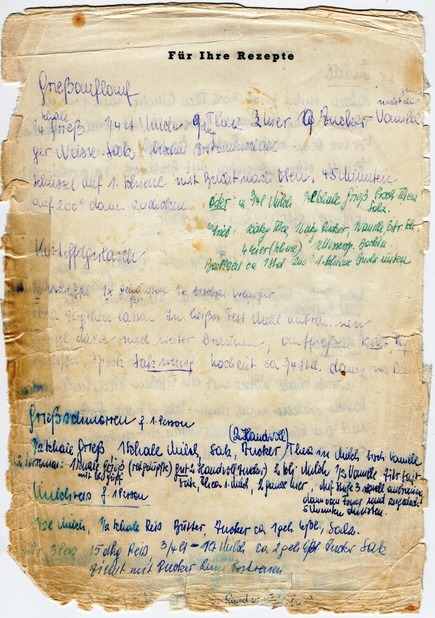
Photo by the author, 2026
Open the image and save it with a right click.
Note on the old recipe
This recipe is based on the old printed note. The readable ingredients and steps are kept, while old-fashioned or unclear details are gently adapted for a modern home kitchen.
The original amount for semolina is written as 1/2 bowl rather than a precise weight. For that reason, this article keeps the old wording but also gives a practical guide amount for today’s kitchens.
Ingredients
- approx.100g semolina
- 500 ml milk
- 150 g Thea, margarine, or butter
- 4 eggs
- 200 g sugar
- vanilla sugar
- grated lemon zest
- ground nuts
- a pinch of salt
For the baking dish
- a little Thea, margarine, or butter
- ground nuts for coating the dish
Notes on Measurements
The original recipe uses dkg, a common unit in older Austrian recipes.
1 dkg = 10 g
So the original amounts become:
15 dkg Thea = 150 g
20 dkg sugar = 200 g
1/2 liter milk = about 500 ml
The semolina is given as 1/2 bowl, which is an old household-style measure rather than a precise modern amount.
For a modern kitchen, about 80 to 100 g semolina for 500 ml milk is a reasonable starting point. The aim is to cook a thick semolina porridge that can later be mixed with eggs and beaten egg whites.
Thea was a margarine brand often used in Austrian home recipes. Butter or margarine can be used today. Margarine keeps the recipe closer to its older everyday style, while butter gives a richer flavor.
Ingredient Notes
Semolina
Semolina is the base of the pudding.
It thickens the milk and gives the dish its soft, grain-like structure.
Fine wheat semolina gives a smoother result. Coarser semolina can be used, but the texture will be more rustic.
Milk
Milk gives the semolina its mild flavor and creamy body.
The cooked porridge should be thick enough to hold the eggs later, but not so dry that it becomes heavy.
If the porridge becomes too stiff while cooling, a small amount of warm milk can help loosen it.
Thea, margarine, or butter
The original recipe uses Thea.
Part of it is cooked with the milk, and the rest is beaten with sugar and egg yolks.
Margarine keeps the recipe closer to the older everyday style, while butter gives a richer taste.
Eggs
The eggs are separated.
The yolks enrich the mixture, and the beaten egg whites make the pudding lighter.
This step is important because it keeps the baked pudding from becoming too dense.
Lemon zest and vanilla sugar
These are important flavorings.
The vanilla gives sweetness and warmth, while lemon zest keeps the pudding from tasting too flat.
Ground nuts
The baking dish is sprinkled with ground nuts.
This adds a mild nutty edge and helps the pudding release more easily.
Ground hazelnuts are especially suitable. Ground almonds can also be used for a milder flavor.
Substitutions for readers outside Austria
This recipe is quite easy to adapt.
Thea can be replaced with margarine or unsalted butter.
Vanilla sugar can be replaced with sugar and a little vanilla extract.
Fine wheat semolina is the best choice, but cream of wheat may work if semolina is not available.
For the nuts, ground hazelnuts are especially suitable. Ground almonds can also be used for a milder flavor. If nuts must be avoided, fine breadcrumbs can be used to coat the dish, although the flavor will be different.
How to Make
1. Heat milk and fat
Bring the milk and about 50 g of Thea, margarine, or butter to a boil.
Stir occasionally so the milk does not catch on the bottom.
2. Cook the semolina
Slowly stir in the semolina.
Keep stirring until a thick semolina porridge forms.
Remove from the heat.
3. Let the porridge cool
Let the semolina porridge cool before mixing it with the eggs.
It should no longer be hot, otherwise the egg yolks may cook too quickly.
4. Cream the remaining fat
Beat the remaining Thea, margarine, or butter with two tablespoons of sugar until creamy.
Separate the eggs.
Add the egg yolks one by one and mix until smooth and light.
5. Add flavor
Season the yolk mixture with vanilla sugar, grated lemon zest, and a pinch of salt.
The flavor should be gentle but noticeable.
6. Beat the egg whites
Beat the egg whites until stiff.
At the end, beat in the remaining sugar to make the mixture more stable.
7. Combine the mixtures
Mix the cooled semolina porridge with the yolk mixture.
Gently fold in the beaten egg whites.
Do not overmix, or the pudding will become heavy.
8. Prepare the baking dish
Grease a baking dish with Thea, margarine, or butter.
Sprinkle the inside with ground nuts.
Spoon in the semolina mixture and smooth the top.
9. Bake
Bake at medium heat for about 50 minutes.
The pudding should be set and lightly golden.
Let it rest briefly before serving.
Tips for Success
Add the semolina slowly
If semolina is poured in too quickly, lumps can form.
Sprinkling it in while stirring gives a smoother porridge.
Cool the porridge before adding eggs
Hot semolina can cook the egg yolks too quickly.
Letting it cool protects the texture.
Fold gently
The beaten egg whites are what make the pudding lighter.
A gentle folding motion works better than strong stirring.
Do not overbake
The pudding should be set, not dry.
If baked too long, it can become firm and lose its soft texture.
Let it rest before serving
A short rest helps the pudding settle.
It will be easier to cut or spoon out after a few minutes.
Taste and Texture
Baked Semolina Pudding is mildly sweet, soft, and warm.
The semolina gives it body, while the beaten egg whites make it lighter than plain porridge.
The lemon zest adds freshness, and the vanilla gives a familiar sweet aroma.
The ground nuts around the dish add a subtle toasted note.
The texture is softer than cake, firmer than porridge, and more homestyle than a smooth custard.
Make-Ahead and Storage
This dish is best served warm.
Leftovers can be covered and stored in the refrigerator.
When reheating, use low heat.
If the pudding has become firm, serve it with a little warm milk, vanilla sauce, or fruit compote to soften the overall texture.
Because the recipe contains milk and eggs, leftovers should be eaten soon.
Serving Ideas
Baked Semolina Pudding can be served with:
- powdered sugar
- apple sauce
- stewed plums
- apricot compote
- berry sauce
- vanilla sauce
A fruit topping is especially good because the light acidity balances the sweet semolina.
Questions and Answers
Why is my baked semolina pudding dense?
It may have been overmixed after adding the beaten egg whites, or the semolina porridge may have been too thick. Fold gently and keep the porridge soft enough to combine smoothly.
Can I tell if it is done without cutting into it?
The top should be lightly golden and the center should look set but still soft. It will firm up a little as it rests.
What fruit topping works best?
Tart fruit works especially well. Stewed plums, apricots, or berries balance the sweetness better than very sweet toppings.
Can I use cream of wheat instead of semolina?
Yes, in many kitchens it will work as a substitute. The texture may be slightly softer or less grainy, depending on the product.
Can I make this without nuts?
Yes. Use fine breadcrumbs to coat the baking dish instead. The flavor will be simpler, but the pudding will still bake properly.
Can I reduce the sugar?
Yes, especially if you plan to serve the pudding with a sweet sauce. The original recipe is quite sweet, so a moderate reduction can work well for modern tastes.
Final Thoughts
Baked Semolina Pudding is a quiet, comforting recipe from the world of Austrian sweet dishes. It begins with a simple pot of semolina porridge, then becomes something more special through eggs, vanilla, lemon zest, and a short time in the oven.
The old household measurement 1/2 bowl is part of the charm of the recipe. It reminds us that older home cooks often worked by sight, texture, and experience rather than exact gram weights.
By keeping the old wording and adding a modern guide amount, this version preserves the feeling of the original while making it easier to recreate in today’s kitchen.
About Grandma Helga
Grandma Helga is a mother and grandmother who spent many years cooking for her family.
The recipes shared on this site are the ones she prepared in her everyday life.
They have been carefully preserved from her handwritten notes and passed down over time.
Today, her family organizes, translates, and shares them so they can continue to be enjoyed.
All recipes are simple, reliable, and made for real daily cooking.